February 2025
February updates: revamped API reference, entity hooks for lifecycle control, and deployment activity history tracking.
✨ A brand-new API reference
We’ve completely revamped our API reference to make it more intuitive, functional, and easy to navigate.
What's new?
- Make API calls directly from the reference – No more switching between docs and tools; send requests right inside the API documentation.
- A fresh, modern design – A cleaner interface that improves readability and navigation.
- Clearer structure – Quickly find endpoints, parameters, and responses.
- Updated request/response examples – Learn faster with improved examples.
✨ New feature: entity hooks
We’re introducing entity hooks, a new way to give you more control over the lifecycle of your entities, such as applications, scopes, and deployments.
With entity hooks, you can run automatic checks before an action takes place, ensuring everything is set up correctly before moving forward.
For example, when creating an application, you can enforce certain requirements, like making sure a Kubernetes cluster is ready before the repository is created. This helps keep things running smoothly and prevents misconfigurations.
👉 Learn more in our Entity hooks docs.
✨ Deployment activity history
You can now view the latest activity and history of a deployment directly from the UI.
With this new feature, you can see who performed what action and when, including:
- Deployment creation.
- Finalization.
- Rollbacks.
This improvement gives you greater visibility and control over deployments, simplifies audits, and ensures better tracking of infrastructure changes.
📌 To access the activity history, just click See history in Deployments for a detailed view of each action.
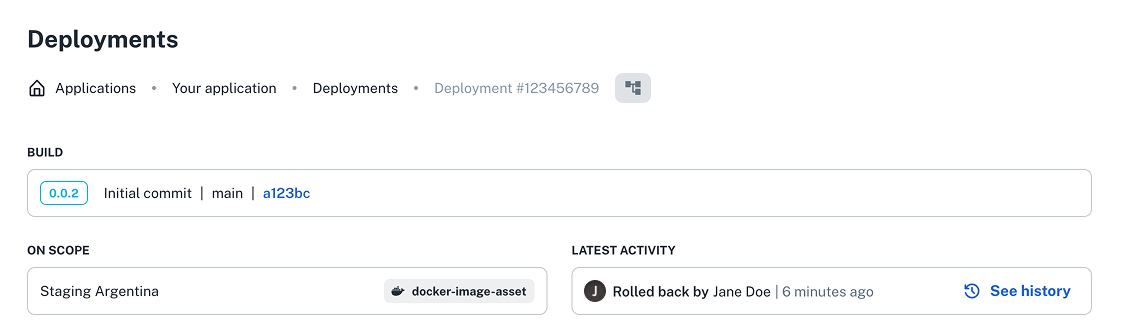
👉 Learn more in our Deployment docs.
✨ Services – additional keywords
When crafting services, links, and actions, you can use AdditionalKeywords to generate dynamic JSON schemas with different values. This feature has been extended to support references to other services or scopes within the same application.
For example, you can now dynamically select services based on their scope slug, making your schemas more flexible and reusable.
Here’s an example from the UI:
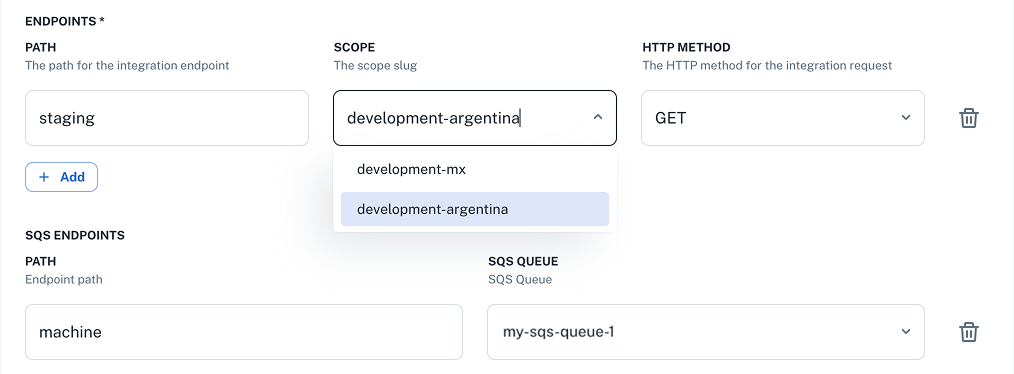
👉 Read more about additional keywords in our Special schema keys docs.
✨ Updates to our CLI
We've made some improvements to our CLI:
- Easier installation – The installation process no longer requires sudo permissions.
- Notification support – You can now create and manage notifications directly from the CLI.
👉 More details in our CLI and Notifications docs.
Wishing you a fantastic month ahead – from the nullplatform team! ❤️